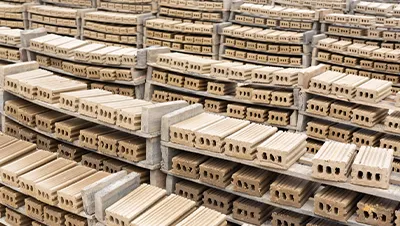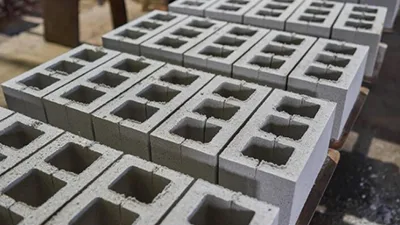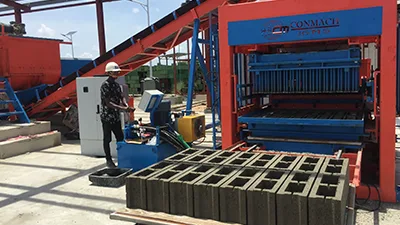
Interlocking paving stones are a flooring option that stands out for its durability and aesthetic appeal in outdoor landscaping. They are commonly used on walkways, garden paths, parking lots, and internal walking areas within sites. Their modular structure interlocks with the ground, creating a long-lasting surface and significantly reducing potential slippage. Variations in color, pattern, and thickness allow for a look that complements the style of the application area.
Interlocking paving stones can remain stable for a long time when a solid foundation is prepared for their application. Steps such as the correct spreading of the sand layer, sufficient compaction, and appropriate joint filling are fundamental stages that determine the quality of the application. Its water-permeable structure prevents puddles from forming on the surface after rain and contributes to safer use of the area. The low maintenance requirement also supports the evaluation of this material as an economically advantageous option.
Interlocking Paving Stone Prices
Interlocking paving stones are a building material preferred for outdoor flooring, produced in different thicknesses and shapes depending on the intended use. Due to their durability, easy installation, and ability to retain their shape for many years, they are frequently used in landscaping applications.
It provides a functional flooring solution for areas such as pedestrian walkways, internal site passages, garden landscaping, and parking lot entrances. Factors determining the cost of this product include the raw materials used in production, the type of mold, the size of the application area, and the labor details.
Products in the paving stone category meet different expectations based on their technical specifications. If the project type requires heavy vehicle traffic, thicker and more durable models are preferred. In areas with heavy pedestrian traffic, options that emphasize decorative appearance are preferred.
Criteria such as production quality, dimensional consistency, and color fastness are other factors that should be examined when conducting a price analysis. The infrastructure preparation during the application phase is also an important factor affecting the total cost.
Key points to consider during the product evaluation process are as follows:
- The product’s resistance to heavy loads
- The dimensions and pattern structure of the model to be used
- The ground hardness and preparation costs of the application area
- The equipment and labor level required for installation
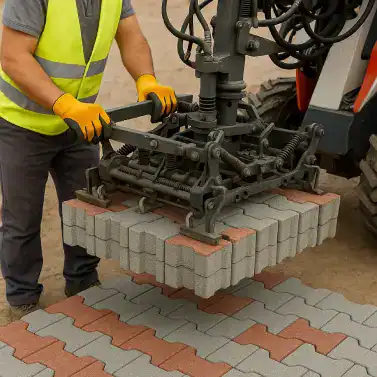
When researching parquet lock stone prices, users also prioritize the correct planning of product selection and the installation process. When elements such as floor settlement, slope calculation, and drainage system are properly planned, a longer-lasting use is achieved. Color and pattern harmony are considered in environmental projects with high aesthetic expectations. Those who want to make a logical comparison at can make a more accurate choice by analyzing the technical specifications and application conditions together.
Paving Stone Prices
Interlocking paving stones are a material commonly used in outdoor flooring, standing out for their durability and various design options. They have a wide range of applications, from pedestrian paths to internal site transitions, garden landscaping to parking lot entrances.
How much does 1 m2 of interlocking paving stone cost in 2025? When determining the price range for this product, production quality, the mold model used, the thickness of the stone, and the technical requirements of the area where it will be applied are taken into account. When aesthetic appearance is a priority, color and surface texture are also included in the evaluation.
Paving stone prices are also affected by labor details that vary depending on the structure of the ground. The slope of the area to be paved, drainage requirements, compaction processes, and infrastructure preparation are important factors that determine the total budget.
When making their selection, users prioritize usage intensity and the expected performance level. In areas with heavier loads, models with a high resistance class are preferred. In design-oriented projects, different shapes and patterns are taken into consideration. Within this framework, each project is evaluated according to its own conditions, and choosing the right model ensures long-term satisfaction.