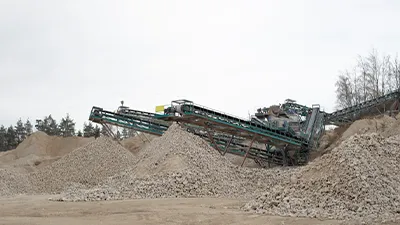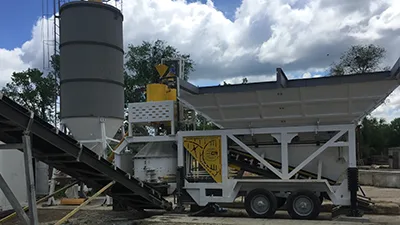
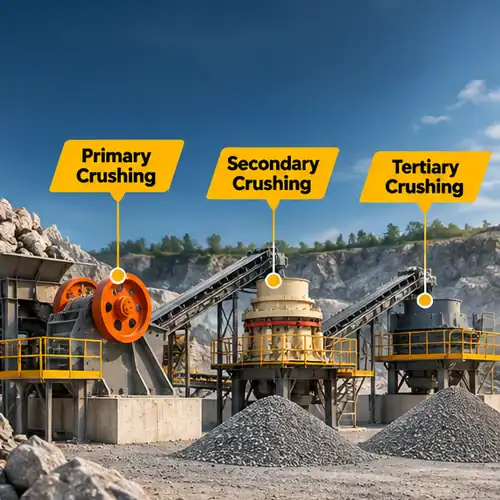
Primary, secondary and tertiary crushing describe successive stages of size reduction in a crushing circuit. Primary crushing receives the largest incoming material and performs the first major reduction. Secondary crushing processes the output from the primary crusher. Tertiary crushing is a later stage used when the plant needs a smaller, more closely controlled product or improved particle shape.
Not every operation requires all three stages. The number of crushing steps depends on the maximum feed size, material characteristics, required product fractions and target capacity.
A well-designed crushing and screening plant is therefore not simply a collection of crushers. Each stage should prepare the material for the next part of the process while screens and conveyors separate and move the different fractions.
Contents
What Is Primary Crushing?
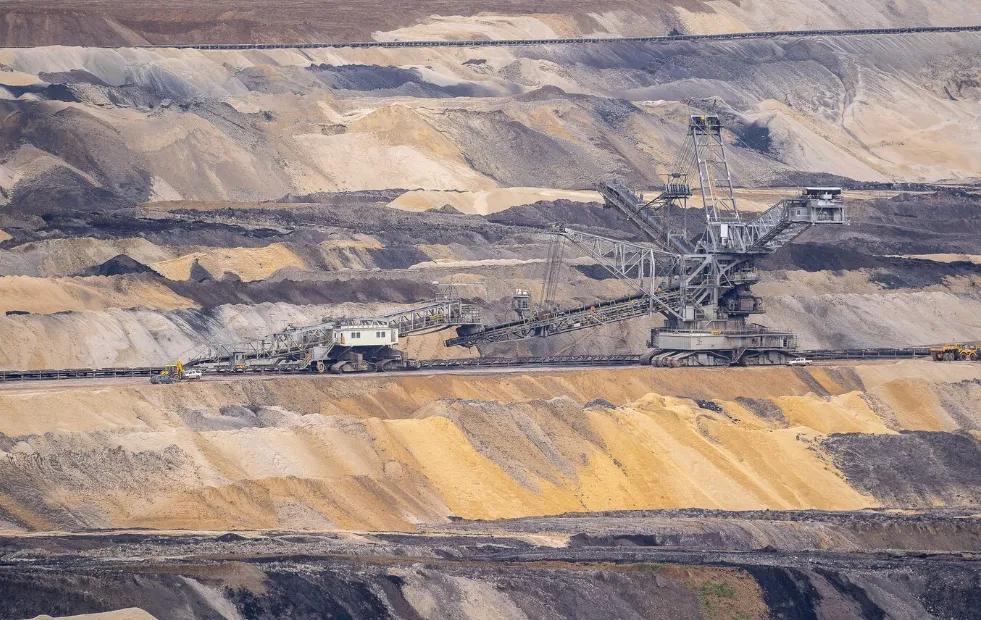
Primary crushing is the first controlled size-reduction stage for material arriving from a quarry, mine, excavation or recycling operation.
The primary crusher normally handles the largest feed in the plant. Its job is often not to produce the final aggregate immediately, but to reduce large lumps to a size that downstream crushers, screens and conveyors can process effectively.
Why Are Jaw Crushers Commonly Used as Primary Crushers?
Jaw crushers reduce material between a fixed and a moving jaw. Their relatively large feed openings and ability to process hard rock make them a common choice for primary aggregate and mineral applications.
A jaw crusher is not the only possible primary crusher. Impact and gyratory technologies can also be used in suitable applications.
The selection depends on factors such as:
- maximum lump size,
- hardness and abrasiveness,
- moisture and clay content,
- required throughput,
- maximum feed size accepted by the next stage.
The primary crusher should prepare the material for the rest of the circuit rather than attempt to perform every reduction step by itself.
Can Material Bypass the Primary Crusher?
Yes.
Incoming feed often contains smaller particles that are already below the size requiring primary reduction.
A grizzly or scalping system can separate this material before it enters the crusher. Removing suitable fines can reduce unnecessary loading and allow more of the crusher capacity to be used for genuinely oversized material.
This is why feeder and scalping design can directly influence primary-crusher performance.
What Is Secondary Crushing?
Secondary crushing processes material that has already passed through the first reduction stage.
The feed is therefore normally smaller and more consistent than raw quarry material. The objective may be to reduce it directly to a saleable fraction or prepare it for another crushing and screening stage.
Which Crushers Are Used for Secondary Crushing?
Several technologies can be used depending on the feed.
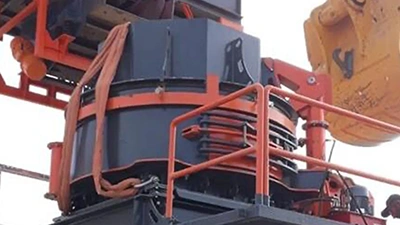
Cone crushers are widely used for secondary reduction of hard and abrasive rock. Material is compressed between a moving mantle and a stationary concave.
Secondary impact crushers can be appropriate where impact crushing, reduction ratio and particle shape are important.
Crusher selection should therefore consider:
- feed hardness,
- abrasiveness,
- incoming gradation,
- required output,
- product-shape requirements,
- wear behaviour.
The name of the crushing stage does not define one mandatory machine type.
Why Is Screening Important After Secondary Crushing?
Once material has been reduced, a screen can separate particles that already meet the required specification.
Correctly sized product can leave the circuit while oversize material is sent for additional crushing.
If oversize particles are returned to the same crusher, the plant is operating in a closed circuit.
Closed-circuit operation provides greater control over final product size, but the returned material also adds to the load on the crusher and screen. This recirculating load needs to be considered when calculating actual plant capacity.
What Is Tertiary Crushing?
Tertiary crushing is a later size-reduction stage used when secondary crushing does not yet provide the required final size, gradation or shape.
It is common in aggregate plants producing several closely controlled fractions for concrete, asphalt or other construction uses.
Tertiary crushing is not automatically necessary. If secondary crushing already delivers the required specification, adding another crusher can create unnecessary capital, maintenance and energy costs.
Can Cone Crushers Be Used for Tertiary Crushing?
Yes.
Cone crushers are widely used in both secondary and tertiary duties. Different chamber designs and operating settings can be selected according to the feed and required product.
This makes cone technology particularly useful in multi-stage circuits processing harder rock.
When Is a VSI Used?
Vertical shaft impact crushers are often used at the later end of the crushing process when fine aggregate production or particle shaping becomes important.
A VSI accelerates material through a high-speed rotor and uses impact to achieve further reduction.
Typical applications can include:
- manufactured aggregate,
- concrete and asphalt aggregate production,
- fine material generation,
- applications where cubical particle shape is important.
A VSI should not be treated as a mandatory tertiary crusher. Its value depends on the feed and final product specification.
How Many Crushing Stages Does a Plant Need?
More crushing stages do not automatically mean a better plant.
Every additional stage introduces another crusher, drive system, conveyor arrangement, wear components and maintenance requirement.
The objective is to reach the required products using the most appropriate process configuration.
A plant dealing with relatively small feed and a coarse final specification may need only one or two crushing stages. A hard, large feed that must be converted into several fine aggregate fractions may require three or more reduction steps.
What Determines the Number of Crushing Stages?
Important variables include:
- maximum feed size,
- final product sizes,
- required reduction ratio,
- hardness and abrasiveness,
- product shape,
- throughput,
- number of finished fractions.
The reduction ratio helps describe the relationship between incoming and outgoing particle size.
If the total size reduction required is too great for one crusher to perform efficiently, distributing that reduction across several stages can create a more balanced circuit.
What Is the Difference Between Open and Closed Circuit Crushing?
In an open circuit, material passes through the crusher and does not return to the same machine.
In a closed circuit, a screen identifies oversize material and sends it back for additional crushing.
Closed circuits can provide tighter product control but create recirculating load. The screen, conveyors and crusher must therefore be sized together.
Actual plant output depends on this complete balance rather than the nominal capacity of one machine.
Frequently Asked Questions About Crushing Stages
What is primary crushing?
It is the first size-reduction stage for large incoming material.
What does a secondary crusher do?
It further reduces material produced by the primary stage.
What is tertiary crushing used for?
It is used for further size reduction, fine aggregate production or product-shape control.
Does every crushing plant need three crushers?
No. The correct number of stages depends on feed and product requirements.
Is a jaw crusher always a primary crusher?
Primary crushing is its most common role, although some jaw designs can perform other crushing duties.
Is a cone crusher secondary or tertiary?
It can perform either role depending on chamber selection, feed and final-product requirements.
Design the Stages Around the Required Final Product
The objective of a crushing circuit is not to install the greatest number of machines. It is to give each machine a clearly defined reduction task and maintain balanced flow between feeding, crushing and screening.
Share your maximum feed size, material type, required product fractions and throughput through the CONMACH contact page to evaluate how many crushing stages your process actually requires.
Contact Us