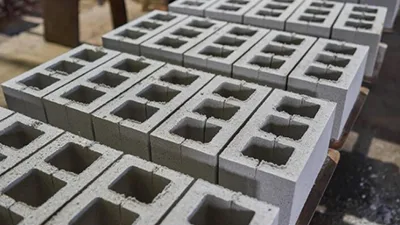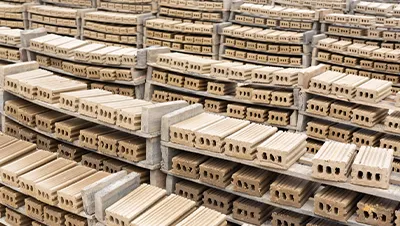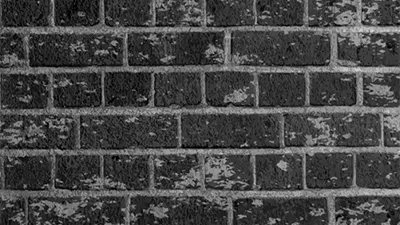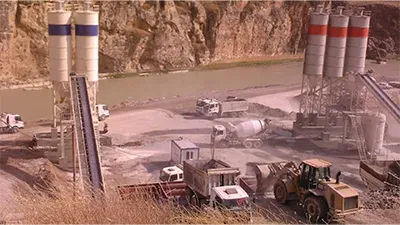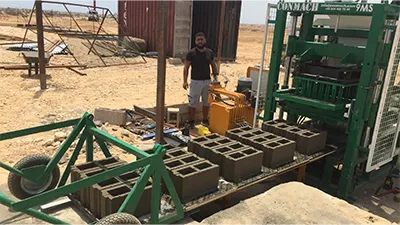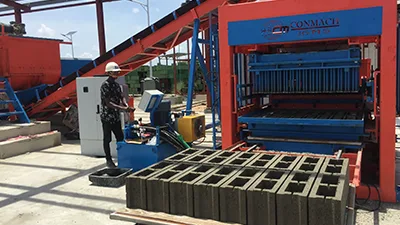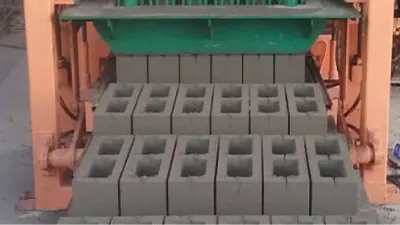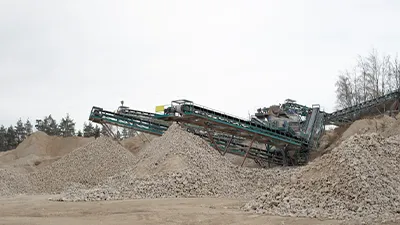
Paver block manufacturing starts with a semi-dry concrete mixture that is fed into a mould, consolidated by vibration and pressure, demoulded and then cured under suitable conditions. Each stage influences the dimensional accuracy, density, surface finish and service performance of the finished paving unit. Stable production therefore depends on more than machine output alone; mix consistency, mould filling, compaction and curing must work as one process.
Paver block manufacturing can be adapted to interlocking pavers, rectangular units, different thicknesses and decorative surface designs. The basic vibro-press principle remains similar, but mould geometry, aggregate grading, pigment use, face-mix design and machine settings may change with the product. A reliable production line is built around the requirements of the paver being manufactured rather than one fixed recipe for every unit.
What Materials Are Used for Paving Blocks?
The main materials are cement, fine aggregate, coarse aggregate and water. Pigments may be added for coloured products, while chemical admixtures can be used when required by the mix design or production process. Material selection should reflect the intended application, including pedestrian use, vehicle traffic, abrasion and environmental exposure.
A typical paver mixture may contain:
- Cement
- Fine aggregate
- Coarse aggregate
- Water
- Pigments
- Chemical admixtures
The proportions are not fixed. Aggregate grading affects mould filling and compaction, while water content must be low enough for the freshly demoulded unit to retain its shape. For this reason, paving blocks are generally made with a semi-dry concrete mixture containing considerably less free water than conventional ready-mixed concrete.
How Are Paving Blocks Moulded?
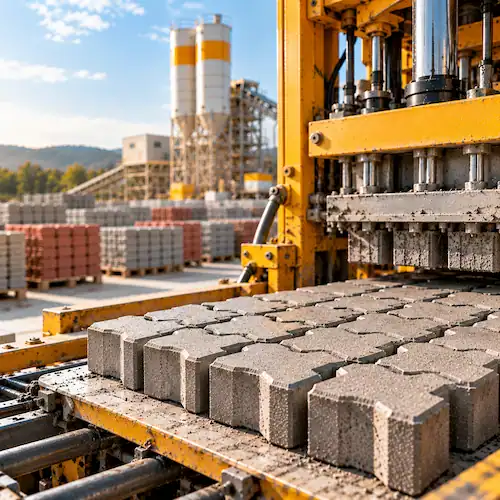
Once the semi-dry mix is prepared, it is transferred to the moulding section. Concrete block machines can be configured with suitable moulds to produce paving units as well as different types of concrete blocks. Uniform mould filling is important because each cavity should receive a comparable quantity of material before compaction begins.
A typical production cycle follows these steps:
- The production pallet moves into position.
- The mould is positioned above the pallet.
- Concrete is fed into the mould cavities.
- The feed system distributes the mixture.
- Vibration starts.
- The press head compacts the concrete.
- The mould is lifted once the target height is reached.
- Fresh pavers leave the moulding area on the pallet.
Although the cycle is short, several settings interact within it. Feeding time, vibration timing, press duration and mould release affect one another. Uneven filling can lead to differences in height, density or surface quality across products made in the same cycle, so repeatable material distribution is more important than simply shortening cycle time.
What Does Vibration Do in Paver Production?
Semi-dry concrete does not consolidate adequately under its own weight. Vibration helps aggregate particles rearrange and reduces internal voids. The press head then applies mechanical pressure, allowing the mixture to reach the density and geometry required for immediate demoulding.
Correctly adjusted vibration and pressure contribute to:
- More clearly defined edges
- Consistent product thickness
- More uniform density
- A stable and even surface
More vibration is not automatically better. Frequency, duration and pressure must suit the mix design, mould geometry and paver thickness. Insufficient compaction can leave voids and weak edges, while unsuitable excessive settings can disturb the material distribution and reduce production consistency.
For high-output lines, an automatic concrete block machine can coordinate feeding, vibration, pressing and pallet movement through repeatable production cycles.
How Are Coloured Pavers Produced?
Colour can be introduced by dosing suitable pigments into the concrete mixture. Some pavers are manufactured with two separate mixtures: a structural base layer and a finer face mix for the visible surface. The base provides the main body of the product, while the face mix is designed for surface texture and colour.
Important variables in coloured or double-layer production include:
- Pigment dosage
- Cement and aggregate colour
- Face-mix moisture
- Layer thickness
- Feeding sequence
- Compaction settings
Consistent colour depends on more than pigment quantity. Cement shade, aggregate colour, water content and curing conditions can also change the final appearance. Keeping these variables stable helps reduce visible differences between production batches.
Why Is a Face Mix Used?
A face mix can create a finer visible texture, a controlled colour or specific surface characteristics. Because it forms the exposed part of the paver, its thickness and bond with the base layer need to remain consistent. Irregular face-mix feeding can result in visible variation from one unit to another.
How Are Paving Blocks Cured?
Freshly demoulded pavers are stable enough to retain their shape, but they have not yet reached their final strength. Cement hydration must continue under suitable moisture and temperature conditions. Curing is therefore an active part of production rather than a simple waiting period after moulding.
Appropriate curing supports:
- Consistent strength development
- Reduced early moisture loss
- Lower risk of edge and corner damage
- Smaller performance differences between production batches
The curing method depends on the mix, plant layout, ambient conditions and required production rate. Handling or packaging should be scheduled according to the early strength of the units rather than elapsed time alone.
How Is Paver Quality Checked?
Paving blocks may be exposed to traffic, water, abrasion and temperature changes during service. Visual appearance alone is therefore not enough to assess quality. Depending on the relevant product standard and intended use, dimensional, mechanical and physical properties may all need to be checked.
Quality control may include:
- Length, width and thickness
- Dimensional accuracy
- Surface appearance
- Colour consistency
- Strength
- Water absorption
- Abrasion resistance
- Slip characteristics
- Freeze-thaw performance
Process data should also be reviewed alongside final product tests. Changes in mix moisture, mould wear, vibration settings or pallet condition can help explain variation before it becomes a repeated production issue. Product dimensions, target output and automation requirements can be discussed through the CONMACH contact page when selecting a suitable machine and mould configuration.
Frequently Asked Questions About Paver Block Manufacturing
What type of concrete is used for paving blocks?
Paving blocks are generally made from a semi-dry, low-water concrete mixture designed for vibro-press production. The exact mix depends on the product dimensions, application and manufacturing system.
How are coloured pavers produced?
Pigments can be added to the main concrete mixture or to a separate face mix. Consistent colour also depends on cement, aggregates, moisture and curing conditions.
Why are paving blocks pressed?
Pressure works with vibration to compact the semi-dry mixture. This gives the fresh unit enough density and stability to retain its shape immediately after demoulding.
Can paver moulds be changed?
Machines designed for interchangeable moulds can produce different paver shapes, dimensions and, in many cases, other concrete block products.
When are paving blocks ready for use?
The required curing and handling time depends on the mix, curing conditions and target strength. Immediate demoulding does not mean the paver has reached its final performance.
What determines paver production capacity?
Cycle time, mould area, the number of units produced per cycle, automation level, shift duration and curing capacity all influence total output.